


TL;DR
Energy gels aren't just sugar: they're fast-absorbing carbohydrates that reach your muscles within 10–15 minutes, using two separate absorption pathways to get up to 90g+ of carbs per hour into your system. When your glycogen runs out, your race falls apart. Gels are how you stop that from happening.
"It's just sugar." Every gel sceptic, ever.
And technically, yes! The carbohydrates in energy gels are sugars. But so is the glycogen stored in your muscles. So is the glucose in your bloodstream right now. Dismissing energy gels as "just sugar" is a bit like calling a trail shoe "just rubber." Accurate, but missing the point entirely (we love you Vibram outsole).
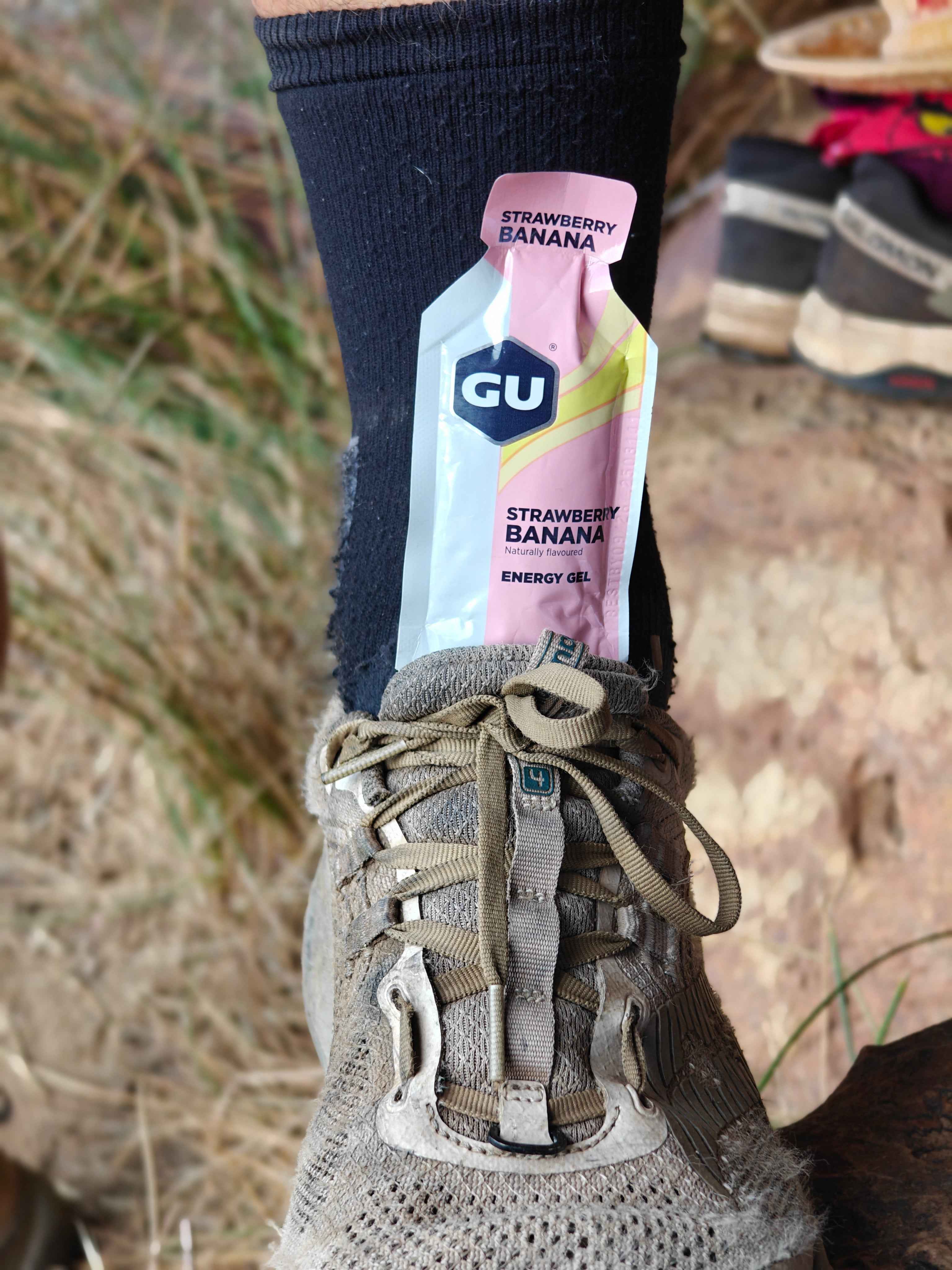
Here's what's actually going on when you take a GU gel mid-run.
The bonk is real, and it's avoidable
Your body stores carbohydrates as glycogen: mostly in your muscles and liver. It's your go-to fuel for moderate-to-hard effort. The problem: you only have about 60–90 minutes' worth before things get uncomfortable.
When glycogen runs out, your body scrambles for alternatives. Your pace drops. Your thinking gets foggy. Your legs feel like they belong to someone else. This is bonking. It's not a fitness problem (it's a fuelling problem). And it's almost completely avoidable.
The runners you see suffering at kilometre 30 usually aren't under-trained. They're under-fuelled.
Why gels absorb faster than real food (get ready, for science)!
During exercise, your body redirects blood away from your digestive system and toward your working muscles. Great for performance, terrible for processing a meal. This is why eating a full breakfast an hour before a race often ends in regret.
GU gels are formulated to be absorbed quickly - simple carbohydrates that cross the gut wall rapidly and reach your muscles within 10 to 15 minutes. No long digestive queue. No competing with the sausage roll you had at kilometre 5.
The clever bit: two carbs, two lanes
GU Energy gels use a mix of maltodextrin (glucose-based) and fructose. This isn't just variety for variety's sake…they're absorbed through completely separate pathways in your gut.
Glucose maxes out at about 60 grams per hour before your gut gets overwhelmed and starts complaining loudly. Fructose uses a different route and adds extra capacity on top. Together, they allow your body to absorb up to 90 grams of carbohydrate per hour - 50% more than glucose alone.
For a short run, irrelevant. For a 6-hour race, potentially everything.
Your gut needs training too
First time taking a gel at race pace? Your stomach might have opinions. Nausea, cramps, or a sudden urgent interest in the nearest tree are all signs of an untrained gut — not a broken one.
The fix is simple: practice in training. Use gels on your long runs at the same timing and effort you'd use in a race. Your gut adapts, absorption improves, and by race day it's all become routine.
Race day is the worst possible time to try something for the first time. Train your gut like you train your legs.
The science behind gels isn't complicated. Your muscles need fuel. Gels deliver it fast. Use them early, use them consistently, and your body will do the rest. Try GU Energy gels the next time you hit your favourite trail run.
Next: the timing guide: when exactly to take an energy gel so you're never running on empty.
Frequently Asked Questions
Are energy gels just sugar? ▼
Technically yes, but so is the glycogen stored in your muscles. The point isn't the ingredient — it's the delivery. Gels use a specific blend of maltodextrin and fructose that absorbs fast, bypasses your digestive queue, and reaches working muscles within 10–15 minutes. A banana does not do that mid-race.
Why do gels use two types of carbohydrate? ▼
Glucose (from maltodextrin) maxes out at about 60g absorbed per hour before your gut gets overwhelmed. Fructose uses a completely separate absorption pathway, adding extra capacity on top. Combined, your body can process up to 90g of carbs per hour — 50% more than glucose alone. For a short run, irrelevant. For anything over 3 hours, potentially everything.
What is bonking and how do gels prevent it? ▼
Bonking happens when your glycogen stores run out — usually around the 60–90 minute mark at race effort. Your legs get heavy, your brain goes foggy, and your pace drops off a cliff. Gels prevent it by continuously topping up your carbohydrate levels before the tank empties. It's a fuelling problem, not a fitness problem, and it's almost entirely avoidable.
Why does my stomach hate gels? ▼
During exercise, blood gets redirected away from your digestive system to your working muscles. This makes digestion slower and more sensitive than at rest. Gels formulated with fast-absorbing carbs minimise the load on your gut — but if you're new to them, start using them in training at race effort. Your gut adapts with practice, same as your legs do.
Do I need gels for runs under an hour? ▼
Not for easy efforts under 60 minutes — your stored glycogen will cover it. Once you're pushing past 75–90 minutes at moderate-to-hard effort, that changes. That's when your stores start running low and gels earn their place.


What Is a GU Energy Gel (No, It's Not Baby Food)?
When to Take a GU Energy Gel (Before You're Already Crawling)?