




TL;DR
- GI distress is one of the most common causes of DNFs in ultramarathon - not fitness, not legs
- Your gut adapts to absorbing carbohydrates at race effort, but only if you train it
- Practise your exact race nutrition on long training runs, every week
- Test gel and liquid carb combinations now, not on race day
- Start fuelling at 20-30 minutes - waiting until you're hungry means you're already behind
- Recovery nutrition counts too-- your gut adapts to that window as well
There's a version of race day that goes like this: your legs feel good, your pace is solid, you're executing the plan. Then somewhere around kilometre 40 your stomach sends you a message. Not a polite one.
You slow down. You stop taking in fuel because everything feels wrong. And then, without much fanfare, your race falls apart.
Not because you weren't fit enough. Because your gut quit.
GI distress - nausea, cramping, bloating, the urgent need to find a bush - is consistently cited as one of the most common reasons endurance athletes drop out of ultras. More common than injury. More common than fitness failure. And in most cases, it wasn't bad luck or a dodgy gel. It was a gut that had simply never been asked to do this job before.
Your gut is trainable. Most people don't train it.
Here's something that doesn't get talked about enough: your digestive system adapts to the demands you place on it. With consistent training, it can learn to absorb carbohydrates efficiently at race effort, tolerate gels and drink mixes without rebelling, and handle the intake volume you actually need to keep moving for 6, 8, 10 hours or more.
But it only learns if you practise. Specifically. Repeatedly. In conditions that resemble racing.
Going out for your long run with a water bottle and figuring you'll sort the nutrition on race day is not a plan. It's a gamble. And the gut is not a forgiving gambler.
What gut training actually looks like
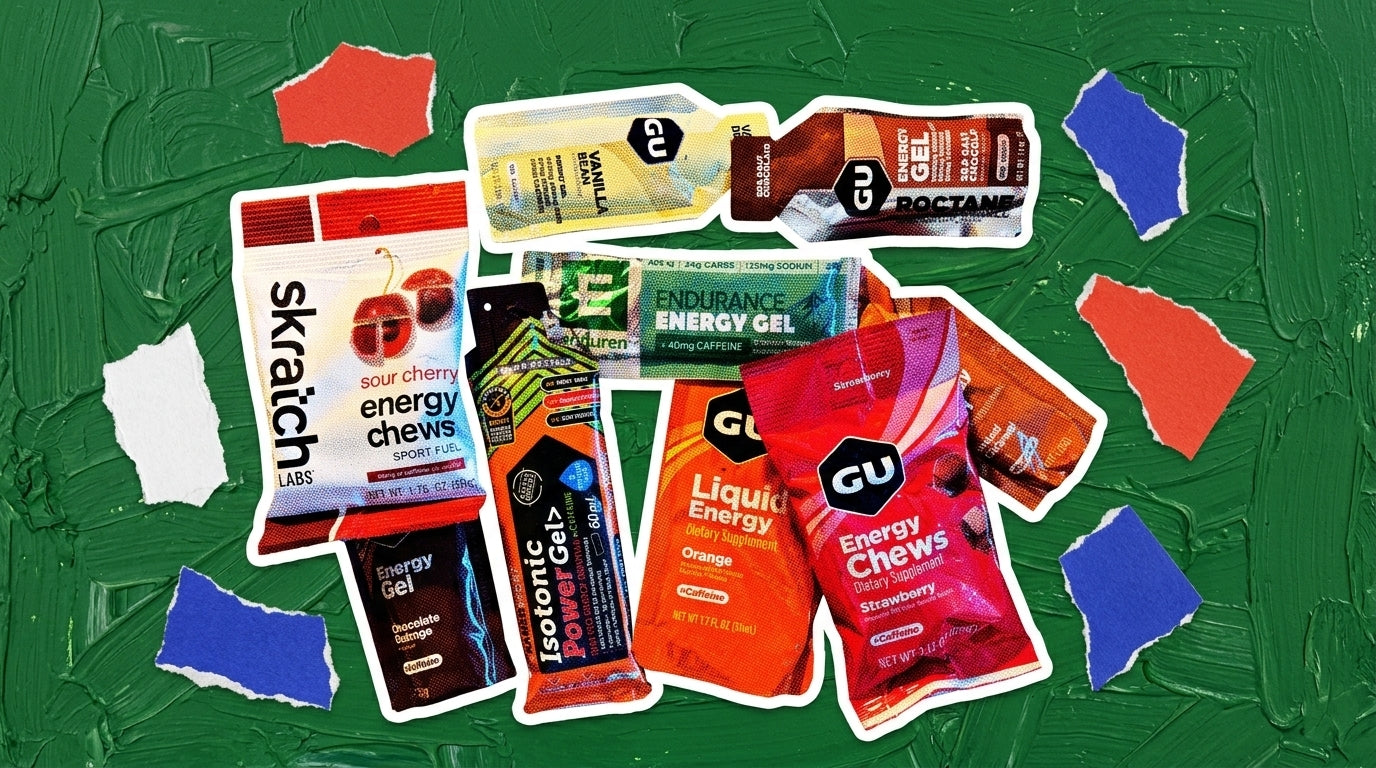
It's not complicated. Pick the products you plan to use on race day -- your gel, your drink mix, your chews - and use them. On every long run. At the intensity you'll be racing at. Starting from the first 20-30 minutes.
That last part matters more than people realise. Most athletes wait until they feel hungry before they start fuelling. By that point your blood sugar is already dropping, your body is starting to compensate, and catching up is harder than staying on top of it. Start early. Stay consistent.
Do this every week for two months and your gut will have processed enough carbohydrate at effort that race day starts to feel familiar. That's the goal. Familiar, not heroic.
Test your combinations
Gels and liquid carbs together is a common race day strategy - gels for convenience, drink mix for steady carbohydrate and electrolyte delivery. It works well. For most people.
For some people that combination causes issues: bloating, cramps, a general sense of regret. Better to find that out on a Tuesday long run than at kilometre 30 of a race you've trained six months for.
Test your combinations in training. If something doesn't work, adjust. That's the whole point.
Don't skip the recovery window
Gut training doesn't stop when you cross the finish line of a training run. Your digestive system is also adapting to absorbing protein and carbohydrates in the recovery window after hard efforts. Eat something within 30-60 minutes. Protein plus carbohydrates, not one or the other.
Beyond just recovery, you're teaching your gut to process nutrients at a time when blood flow is still partially redirected to working muscles. The more consistently you do this, the more efficiently it happens. Which matters when you're asking it to do the same thing at the end of a long race.
Nothing new on race day
It's the oldest rule in endurance sport. Most people know it. Fewer actually follow it - because following it means doing the work in advance.
The gel you've never practised with is the one that'll ruin your race. The drink mix you tried for the first time at the aid station is a gamble. The recovery drink you bought the night before because it was on sale is not a plan.
Race day should be boring from a nutrition perspective. Every product familiar. Every timing cue second nature. The only thing that should feel uncertain is how the race itself unfolds - not whether your stomach is going to cooperate.
Ten weeks to PUFfeR. This is the window. Use it.
Frequently Asked Questions
How long does it take to train your gut?
Most athletes notice meaningful adaptation within 4-6 weeks of consistent practice. That means using your race nutrition on every long run, not occasionally. Ten weeks out is a good window to start - enough time to adapt, enough time to troubleshoot if something isn't working.
How many carbohydrates should I be taking per hour?
For efforts over 90 minutes, a general starting point is 60g of carbohydrate per hour. Trained athletes can absorb up to 90g per hour using a mix of glucose and fructose sources. Start conservatively and build up - more is not always better until your gut is used to it.
What causes GI distress during races?
Several things can contribute: taking in too much too fast, using products your gut hasn't encountered at race intensity before, combining formats (gels plus liquid carbs) without testing them, dehydration, and high fat or fibre intake close to race start. The most common factor is simply asking your gut to do something it hasn't practised.
Should I fuel differently on training runs vs races?
For gut training purposes - no. That's the point. Your long runs should mirror your race nutrition as closely as possible. Same products, same timing, same quantities. Save the casual runs for running. Use your long efforts to practise.
What if I've always had stomach issues during races?
Start simpler. One product at a time. Test a single gel format on long runs before adding anything else. Some athletes do better with liquid carbohydrates only - no gels. Others need solid food. The only way to know is to test systematically, which is exactly what training runs are for.

Post-Race Recovery Nutrition: What to Do in the First 48 Hours
Caffeine and Endurance Running: What It Actually Does and When to Use It