


TL;DR
Fitness gets you to 90 minutes. Fuelling gets you the rest. Start taking on carbs at the 45-minute mark, repeat every 45 minutes, sip water every 15–20 minutes. For anything over 90 minutes, gels and electrolytes aren't optional - they're the strategy.
Here is something nobody tells you when you sign up for your first trail race or long run: fitness will only get you so far. At some point, probably around the 90-minute mark, your body stops caring how many kilometres you've logged and starts caring very much about whether you've eaten enough.
That's what endurance nutrition is about. Not supplements, not complicated meal plans, not eating chia seeds every morning and pretending you enjoy it. Just giving your body the fuel it needs to keep going when things get hard.
Here's the basics.
Why your body runs out of energy
Your muscles run on glycogen, which is just stored carbohydrate. The problem is your body can only store about 90 minutes' worth of it at moderate effort. Once it's gone, your legs get heavy, your brain gets foggy, and everything hurts more than it should (including your ego).
This is called bonking, or hitting the wall. It feels like a fitness problem, but it's almost always a fuelling problem. And the good news is it's almost entirely preventable.
The fix: fuel early, fuel often
The most important rule in endurance nutrition is to start fuelling before you feel like you need to. By the time your energy drops, you're already behind. The fuel you take then needs 10 to 15 minutes to kick in, which is a long time to spend shuffling along, wondering why you ever thought this was a good hobby (read: what the hell - did I think this was just a nice day in the mountains - somebody help!).
For any run over75 minutes, start taking on carbohydrates around the 45-minute mark. Then repeat every 45 minutes after that.
Fuelling is not a rescue plan. It's maintenance. Top up before the tank runs dry.
What to eat on a long run
In an ideal world, real food would work perfectly mid-run. And sometimes it does. But for most people at a decent effort level, solid food is slow to digest and awkward to carry. That's where purpose-built running nutrition comes in.
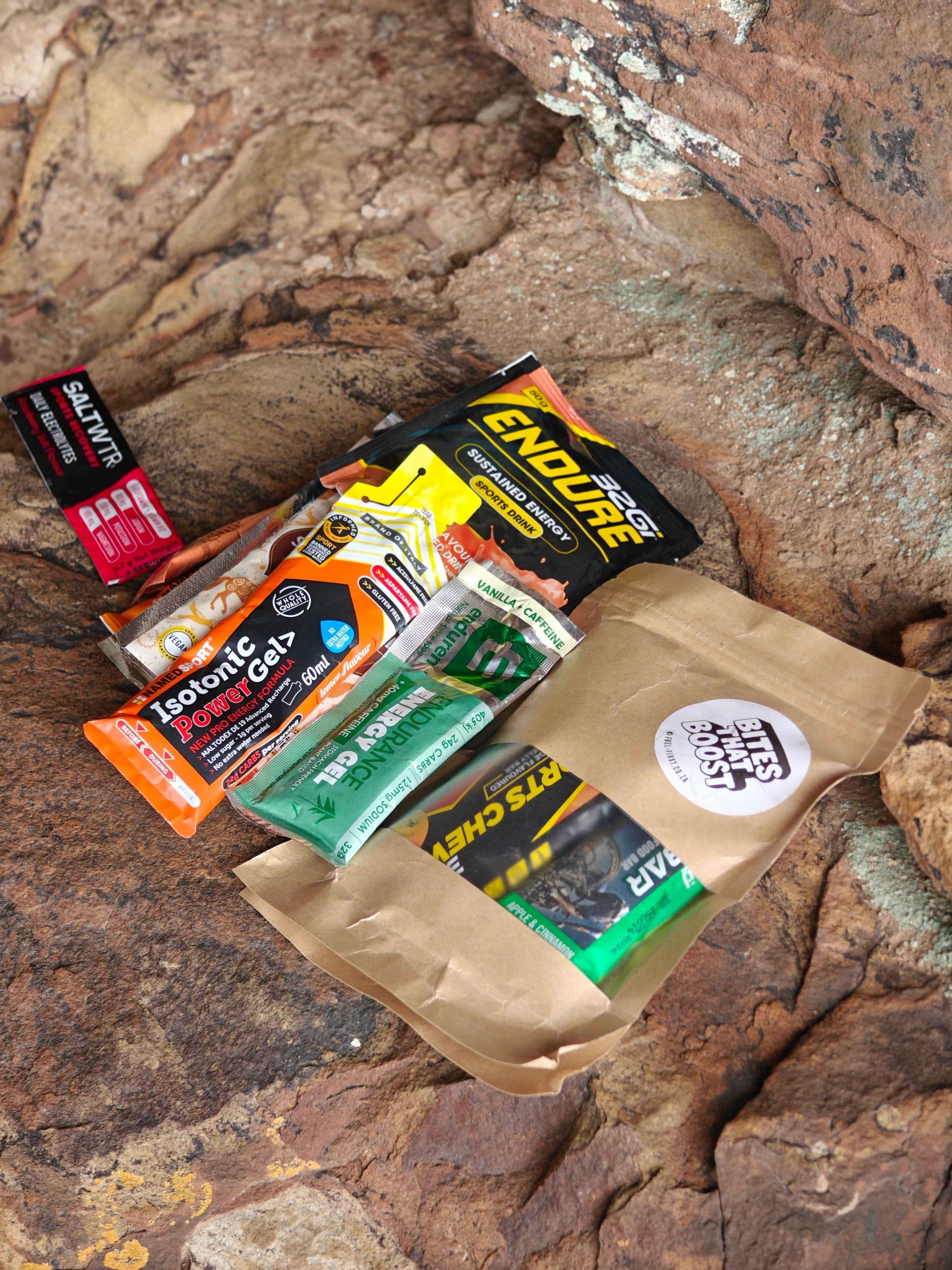
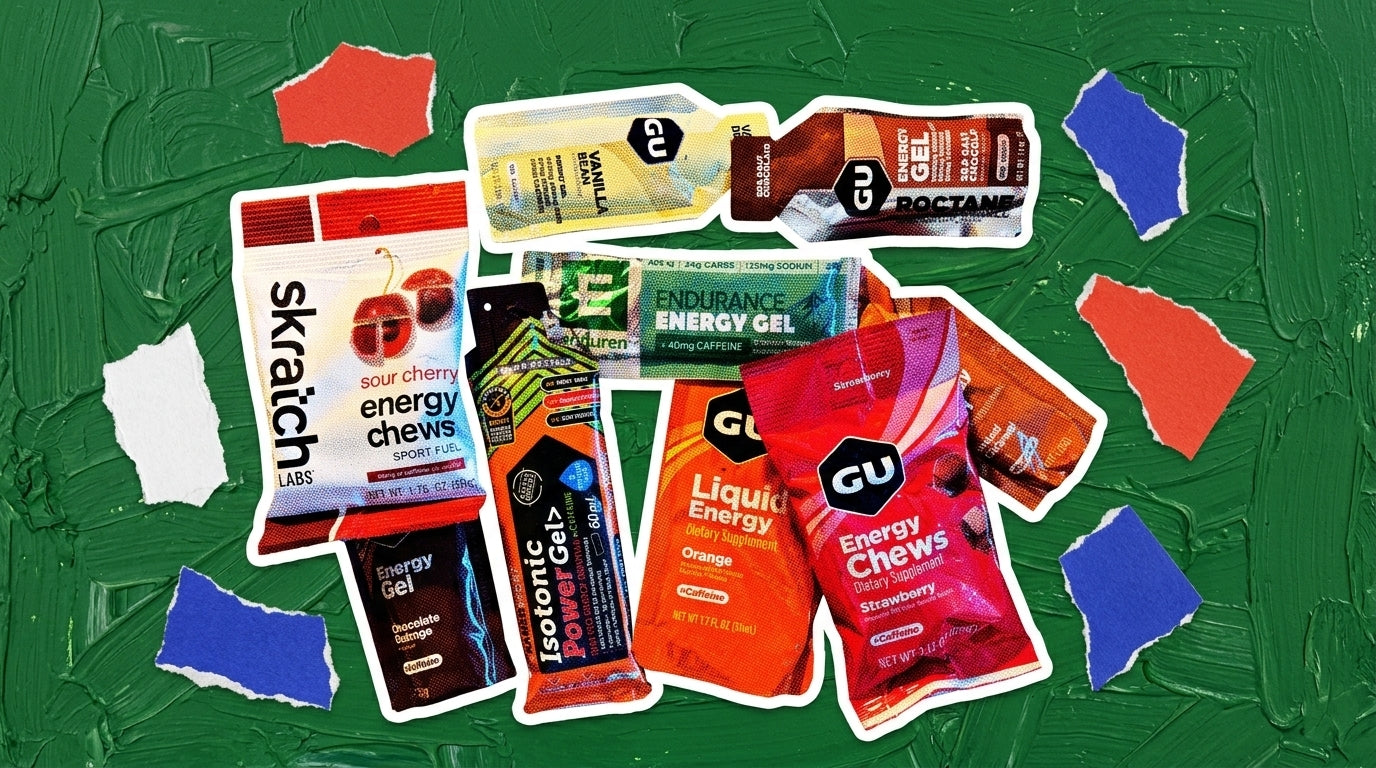
Energy gels are the most popular option for a reason. A single GU Energy Gel delivers around 22 grams of fast-absorbing carbohydrates in a small, portable sachet. No chewing, no fumbling, no stopping. It absorbs quickly and gives your muscles what they need within minutes. (If you're new to them, our guide to what's in a GU gel is a good place to start.)
Electrolytes matter too. Sweat takes sodium with it, and sodium plays a bigger role in how you feel and perform than most people realise. Sipping an electrolyte drink or using a hydration tablet alongside your gels keeps everything in balance.
A simple fuelling framework for beginners
• Run under 60 min at easy effort: water only, no extra fuel needed
• Run 60 to 90 min: one gel at the 45-minute mark, water throughout (but this isn't always necessary)
• Run over 90 min: one gel every 45 minutes from the start, sip water every 15 to 20 minutes
• Race day: do exactly what you practised in training. Not the time for experiments.
One more thing
Your gut needs practice, too. The first time you take a gel at race pace, your stomach might be less than thrilled. Your mouth wondering what this high-viscose stuff is. That's normal. Use gels on your long training runs consistently, and your body adapts. By race day, it becomes routine.
Endurance nutrition sounds complicated, but the basics are simple: start early, stay consistent, and don't wait until you're already suffering. That's it.
Fuel First. Every time. The mountain doesn't care if you forgot to eat.
Frequently Asked Questions
When do I need to start fuelling on a long run? ▼
Around the 45-minute mark, before you feel any energy drop. Your glycogen stores last roughly 60–90 minutes at moderate effort. If you wait until you feel flat, you're already behind — a gel takes 10–15 minutes to absorb and kick in. Get ahead of it.
How much should I eat during a long run? ▼
One gel every 45 minutes from the 45-minute mark, with water every 15–20 minutes. For runs over 90 minutes, add electrolytes alongside — especially in heat. For ultras, aim for 60–90g of carbs per hour total, which means combining gels with other sources if you're out there long enough.
Can I use real food instead of gels? ▼
At slower efforts or on very long ultras, yes — many runners use a mix of real food and gels. At race pace or harder training efforts, solid food is slow to digest and hard to carry. Gels are purpose-built for the job: fast-absorbing, portable, and reliable. Real food earns its place at aid stations, not mid-descent.
Do I need to fuel on runs under an hour? ▼
At easy effort under 60 minutes, no — water is enough and your stored glycogen will cover it. For runs between 60 and 90 minutes, one gel around the 45-minute mark is a sensible option depending on intensity. Once you're over 90 minutes at any real effort, fuelling during the run isn't optional.
Why do gels sometimes upset my stomach on runs? ▼
Usually because your gut hasn't had enough practice at race effort, or you took the gel without water, or you left it too late and were already dehydrated. The fix: use gels consistently on long training runs at the same intensity you race. Your gut is trainable — it just needs the reps before race day.


What to Eat Before a Long Run: Trail Running Nutrition Guide